Safety vest buying guide
Which safety vest does your crew need?
The class is set by the traffic your crew works next to, not by the color of the vest. Here is how to read the difference between Class 1, Class 2 and Class 3, what the label has to say, and how to put a logo on a certified vest without losing the rating.
ANSI/ISEA 107
Class 1, 2 and 3
Type R, O and P
Rated from the manufacturer’s spec
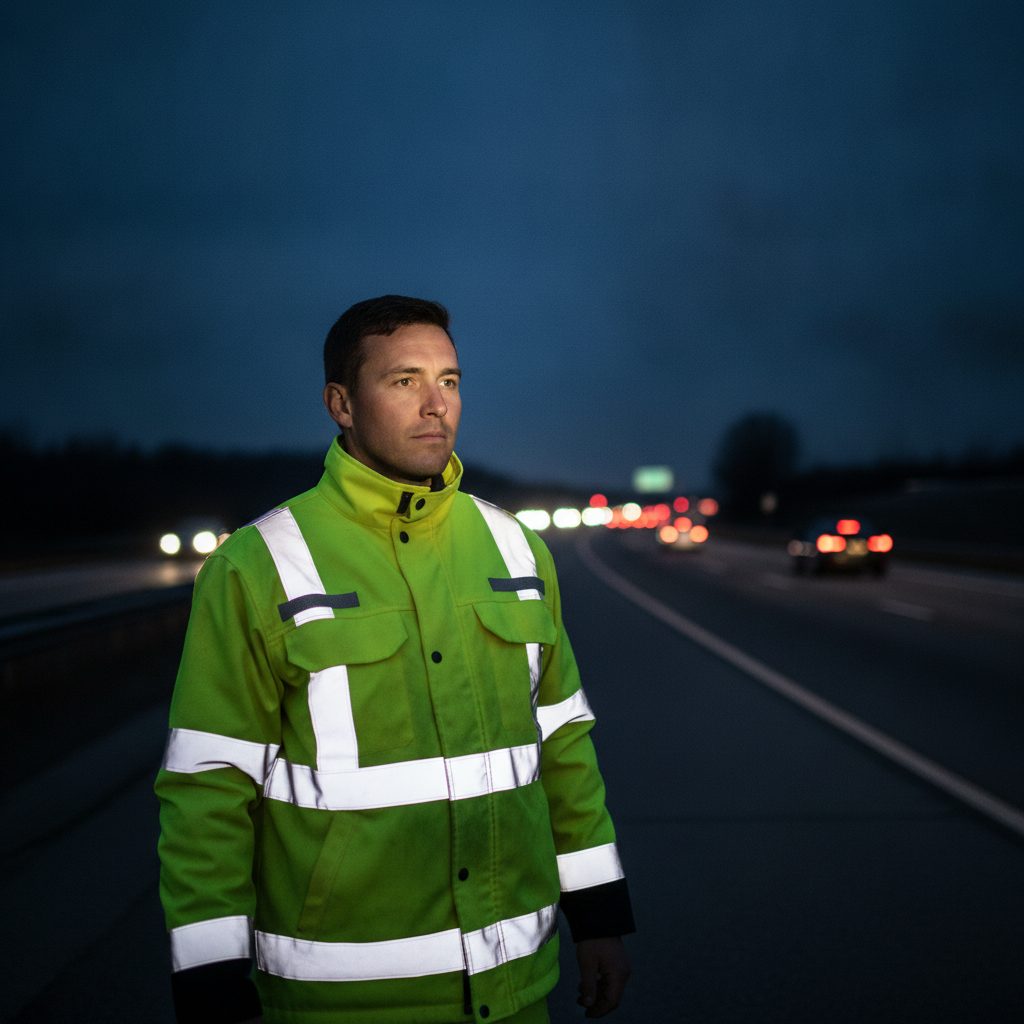
The three classes
Class 1, Class 2, Class 3
Class 1
The lowest rated class, for work well away from traffic where vehicles are moving slowly. Parking attendants, warehouse pickers, delivery yards.
It is the least common class on a job site, and this range starts at Class 2 because that is where most crews actually land.
Class 2
Moderate risk. Roadway work near traffic moving up to around 50 mph, or sites where visibility is reduced but exposure is limited. Parking lots, airports, utility maintenance, construction where the crew is not directly beside moving lanes.
This is where most vests, shirts and standalone pieces sit. If the site plan says Class 2, a vest or a hi-vis shirt gets you there.
Class 3
The high-risk class. Flaggers in active lanes, interstate and highway work, anyone inside braking distance of fast traffic. If someone on your crew is the last thing between a distracted driver and the work zone, they are in Class 3.
Class 3 needs more fluorescent background and more reflective tape than Class 2, so jackets and sleeved garments are the common route. A Class 3 vest exists, and so does a Class 3 shirt, but sleeves are how most garments get there.
Choose by the hazard
Four questions that settle the class
Will the worker be inside a roadway work zone?
Class 2 at least. If the traffic is moving at highway speed or the worker is a flagger, Class 3.
Is it off-road work around moving equipment?
Rail yards, airport ramps, warehouses with vehicle traffic. That is Type O territory, and Class 2 covers most of it. Look for Type O on the label rather than Type R.
Are the conditions especially demanding?
Night work, poor weather, high-speed traffic or long sight lines all push toward Class 3, because more background material and more tape is what buys the extra distance.
Is the vest only for identifying a role?
Site visitors, event staff, a supervisor who needs to stand out indoors. Class 1 or an enhanced-visibility vest does the job, and you are not paying for a rating nobody will inspect.
Every rating on this site comes from the manufacturer’s spec sheet
Class 2, priced
Vests and shirts rated Class 2 by the manufacturer. Open one to put your logo on it and see the price at your quantity.
-

Men’s Hi-Vis Class 2 Economy Vest
$32.14 – $58.7027 minimum2 to 3 weeks
View Product: Men’s Hi-Vis Class 2 Economy Vest -
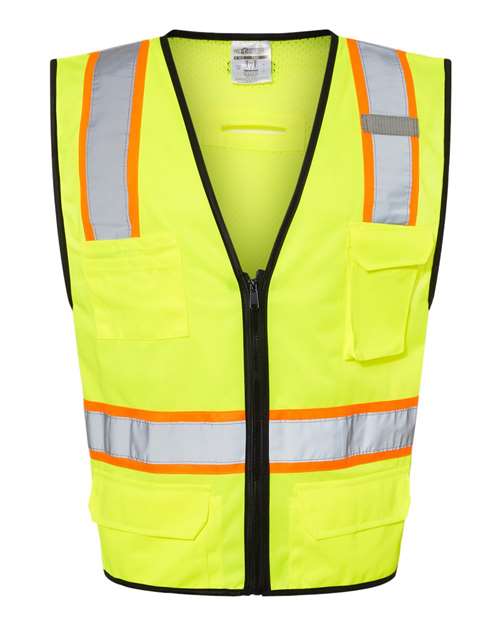
Unisex 6 Pocket Contrast Class 2 Vest
$24.62 – $50.5727 minimum2 to 3 weeks
View Product: Unisex 6 Pocket Contrast Class 2 Vest -
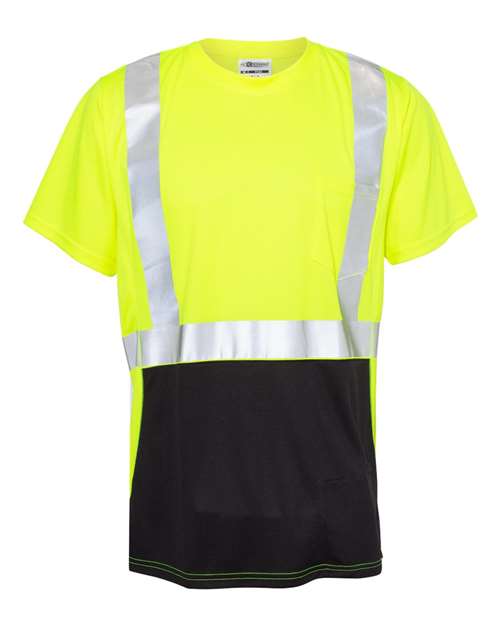
Unisex Black Bottom Class 2 T-Shirt
$47.45 – $75.2927 minimum2 to 3 weeks
View Product: Unisex Black Bottom Class 2 T-Shirt -
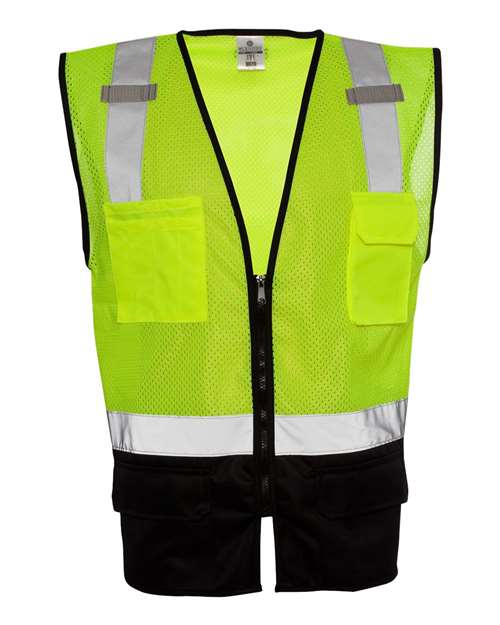
Unisex Black Bottom Mesh Class 2 Vest
$39.36 – $66.5327 minimum2 to 3 weeks
View Product: Unisex Black Bottom Mesh Class 2 Vest -
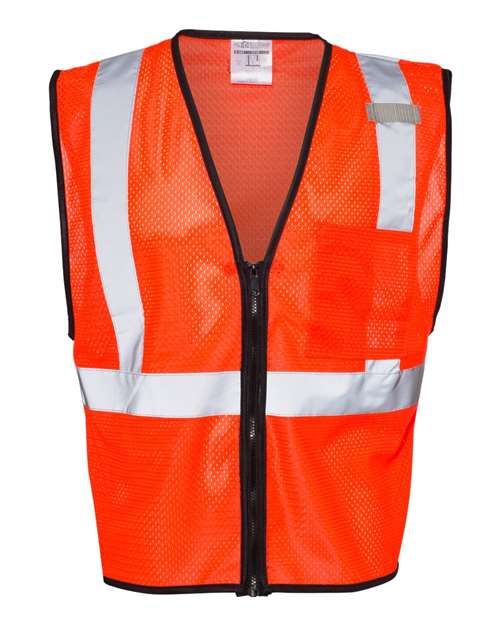
Unisex Single Pocket Zipper Mesh Class 2 Vest
$23.64 – $49.5027 minimum2 to 3 weeks
View Product: Unisex Single Pocket Zipper Mesh Class 2 Vest -
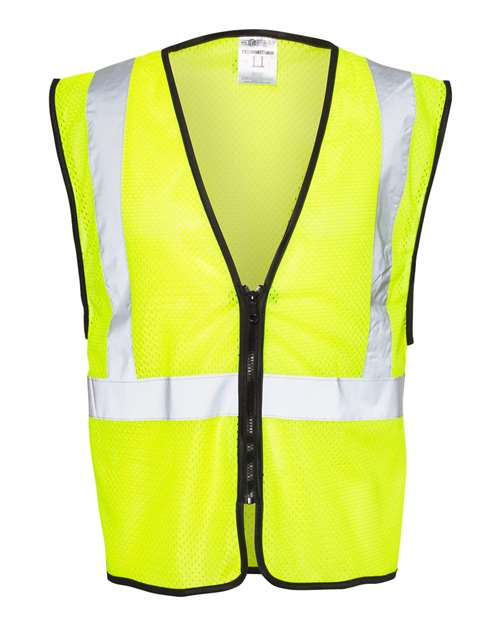
Unisex Zippered Mesh Economy Class 2 Vest
$18.17 – $43.5727 minimum2 to 3 weeks
View Product: Unisex Zippered Mesh Economy Class 2 Vest
Class 3, for the fast-traffic jobs
Vests, shirts and outerwear rated Class 3 by the manufacturer. The same configurator, the same live price.
-
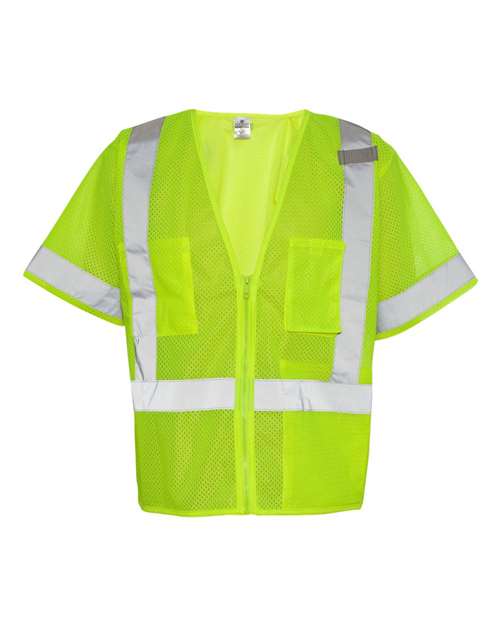
Unisex Class 3 Economy Vest
$41.98 – $69.3627 minimum2 to 3 weeks
View Product: Unisex Class 3 Economy Vest -
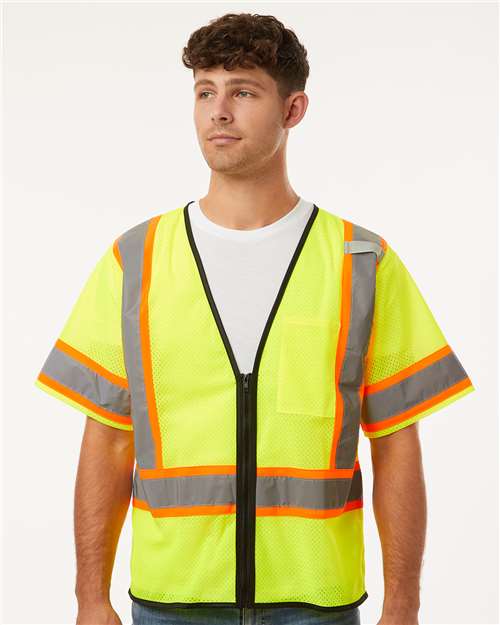
Unisex Class 3 Mesh Zippered Vest
$39.36 – $66.5327 minimum2 to 3 weeks
View Product: Unisex Class 3 Mesh Zippered Vest -
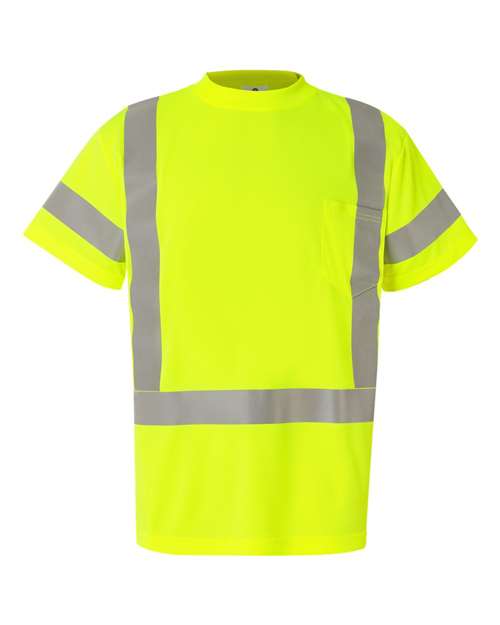
Unisex Class 3 T-Shirt
$49.32 – $77.3227 minimum2 to 3 weeks
View Product: Unisex Class 3 T-Shirt -
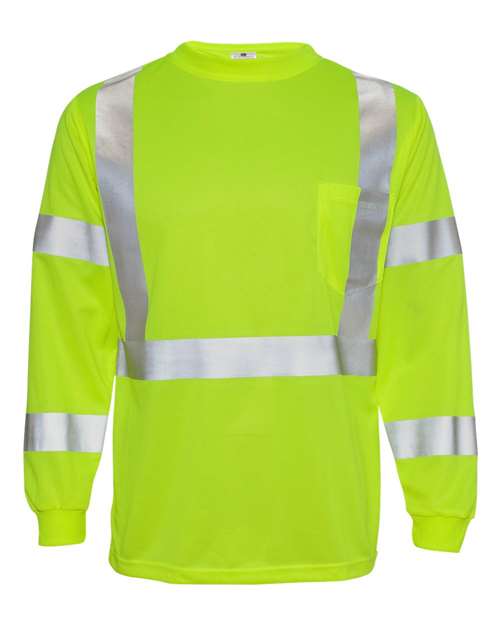
Unisex Long Sleeve Class 3 T-Shirt
$41.62 – $68.9727 minimum2 to 3 weeks
View Product: Unisex Long Sleeve Class 3 T-Shirt -
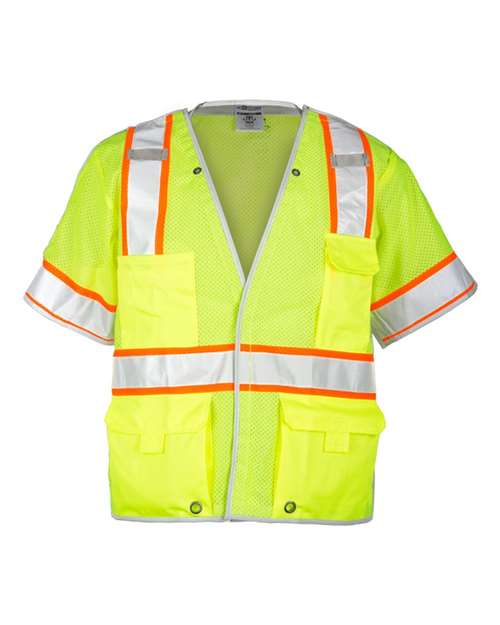
Unisex Premium Brilliant Series® Breakaway Class 3 Vest
$68.18 – $97.7627 minimum2 to 3 weeks
View Product: Unisex Premium Brilliant Series® Breakaway Class 3 Vest -
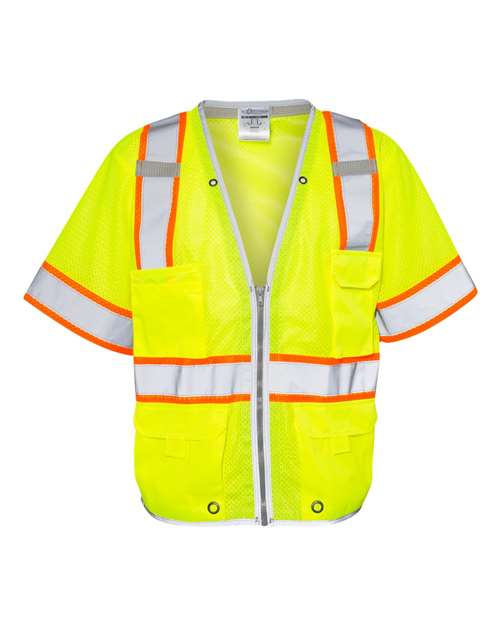
Unisex Premium Brilliant Series® Heavy Duty Class 3 Vest
$53.93 – $82.3127 minimum2 to 3 weeks
View Product: Unisex Premium Brilliant Series® Heavy Duty Class 3 Vest
The type
Type R, Type O, Type P
Type R: roadway
Roadway and temporary traffic control. Highway crews, flaggers, DOT work.
Most construction and contractor buyers are here. Type R Class 2 covers the majority of roadway work; Type R Class 3 is for high-speed highway and interstate exposure.
Type O: off-road
Enclosed environments where road vehicles are not the hazard but heavy equipment is. Airport ramp crews, rail yards, warehouses with forklift traffic.
The rating works the same way. The type tells the inspector which environment the garment was certified for.
Type P: public safety
Emergency responders, law enforcement, fire. Type P carries its own additional requirements on top of the class.
If your crew is police or EMS, the spec sheet has to say Type P, not just a class.
Reading the label
How to tell if a vest is certified
Three things on the label, all three present
A certified garment references ANSI/ISEA 107, names a class, and names a type. If all three are there, the manufacturer is certifying to the standard. A label that says ANSI compliant without a class and a type is naming the standard, not certifying to it.
A safety manager scans the garment and sees tape. An inspection reads the label. Some enhanced-visibility vests use the same 3M tape as certified ones and still are not certified, so the label is the test, not the look.
Does the color decide the class?
No. Safety green and orange-red are the two approved background colors and both are used at every class. Green has an edge at dawn and dusk; orange separates better against green foliage.
The class comes from how much fluorescent background and how much reflective tape the garment carries. A fluorescent tee with no tape is a safety-color garment with no class to state, which is correct, not a gap.
Decorating a certified vest
Put a logo on it without losing the rating
Nothing goes on the tape. Not a print, not a stitch. Everywhere else is fair game, and that covers a left chest logo, a full back, a name drop or a phone number across the shoulders. On a borderline garment a large print can eat into the fluorescent area the standard also requires, so if the rating has to survive an inspection say so up front and we keep the decoration conservative.
FAQ
Safety vest questions
Can my crew wear Class 2 on a highway job?
Only if the site plan says so. Highway and interstate work with traffic at speed is Class 3 territory, and flaggers are Class 3 by default. When in doubt, buy up a class. The price difference is smaller than the cost of a finding.
How long does a run take?
2 to 3 weeks, including shipping, measured from artwork approval. Production time is quoted separately from shipping, and tracking is emailed the moment it ships.
Is a safety-green tee without tape hi-vis?
It is background material, not a classified garment. It complies for some applications and is not rated for others. Brands like Gildan and Hanes say exactly what those pieces are; the problem is a buyer assuming fluorescent means certified.
When does a vest come out of service?
When the fluorescent fabric has faded, the tape is cracked, torn or peeling, or the garment is soiled to the point it no longer reads as fluorescent. Hi-vis is laundered on a schedule, so the crews that reorder on a cycle are the ones that stay compliant.
Can you decorate a certified vest?
Yes. The rule is that nothing goes on the reflective tape, and the placement options in the configurator reflect it. Upload the logo, set the placement, and a mock-up comes to you for approval before anything runs.
Know the class? Shop the vests.
Every certified vest on this site opens into the configurator. Put your logo on one and see the price at your quantity, or save it as a quote with no payment.