
Before you order
Which class.
Where the logo goes.
The buyer with a purchase order in hand types “class 2 vs class 3” before “buy hi vis shirt”. These pages answer that, plainly, and each one points at the garments it applies to.
 Compliance
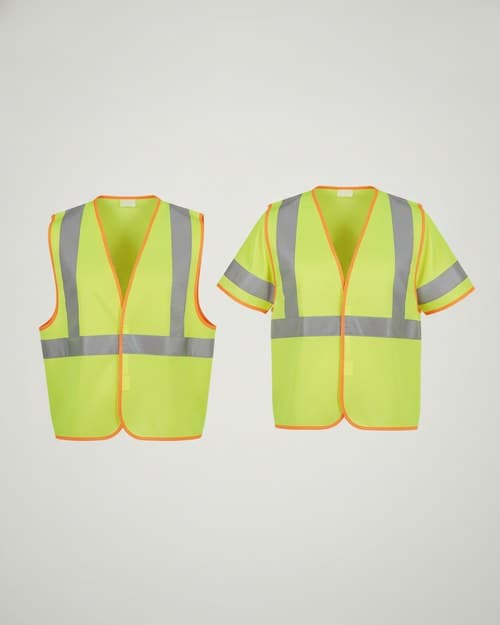
Class 2 vs Class 3: which one your crew needs
Class 2 is for a lot of job sites. Class 3 is for the ones where getting the class wrong puts someone in the path of a truck.
Read it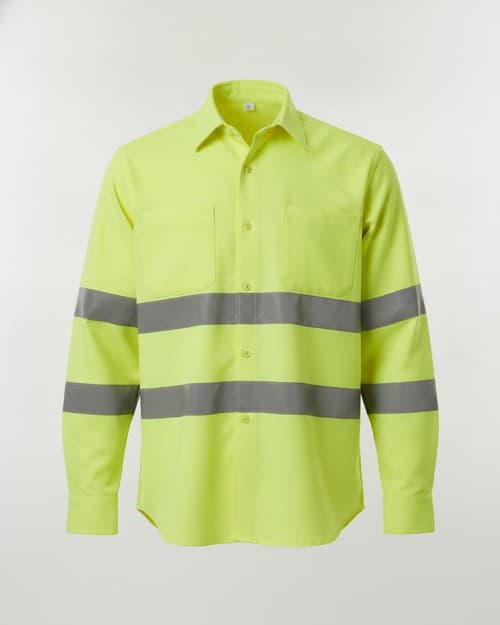 Compliance
What hi-vis clothing actually means
Not all bright colors are hi-vis. A neon green tee from a regular supplier is not a hi-vis garment, even if it looks the part.
Read it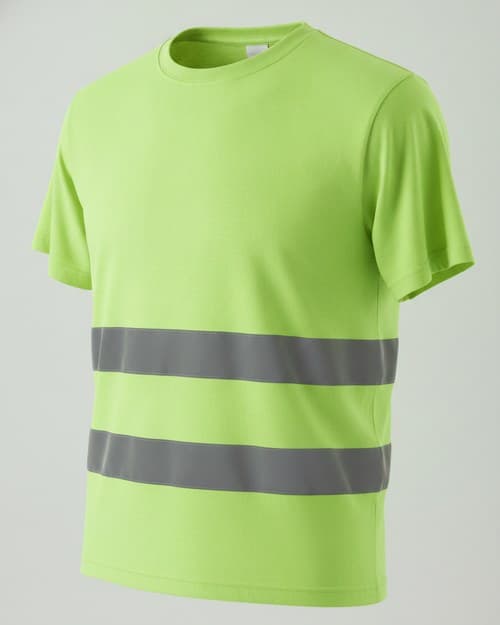 Decoration
Decorating hi-vis without losing the rating
You can print on a hi-vis shirt. You just can't print on the tape.
Read it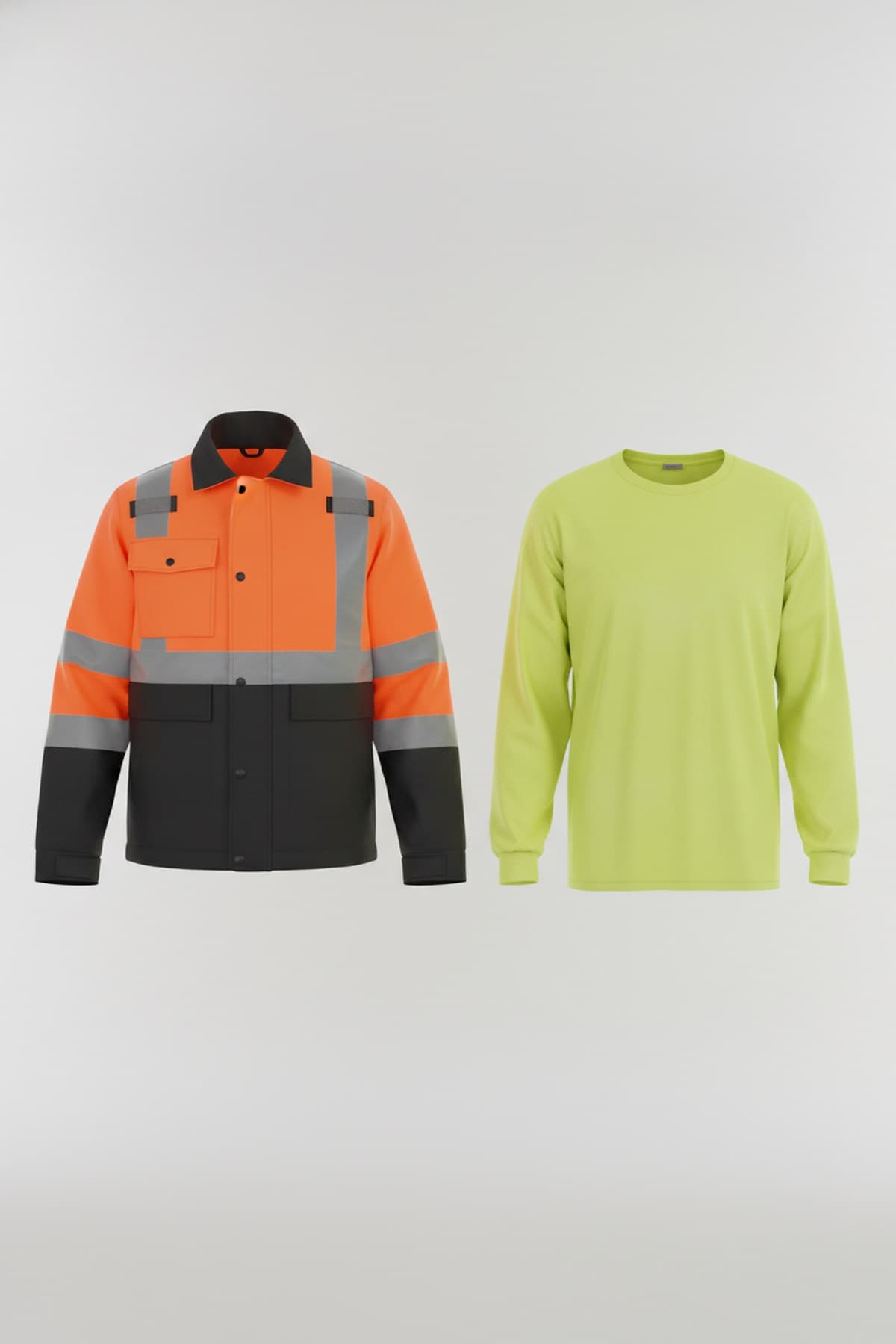 Buying
Certified, enhanced, or just a safety color
Some garments on job sites look like hi-vis and aren't. A garment can have fluorescent fabric and tape and still fail an inspection. Here's how to read the difference.
Read itOSHA does not approve products
The standard that governs hi-vis is ANSI/ISEA 107, and that is the one these guides name.
Class 2 vs Class 3
Class 3 adds more fabric and more tape.
ANSI/ISEA 107 ties the class to the traffic. Read across, row by row.
| Spec | Class 2Moderate risk | Class 3High risk |
|---|---|---|
| The exposure | ||
| Traffic | Roadway work near traffic up to 50 mph | Traffic over 50 mph |
| Typical work | Parking lots, airports, utility maintenance, construction not beside moving lanes | Flaggers in active lanes, work on interstate highways |
| The garment | ||
| Background material, minimum | 775 sq in | 1,240 sq in |
| Retroreflective tape, minimum | 201 sq in | 310 sq in |
| Common pieces | Most vests, shirts and standalone pieces | Jackets. A Class 3 shirt exists, but it is rarer |
| On the spec sheet | ||
| Type R | Type R Class 2 covers the majority of roadway work | Type R Class 3 is for high-speed highway and interstate exposure |