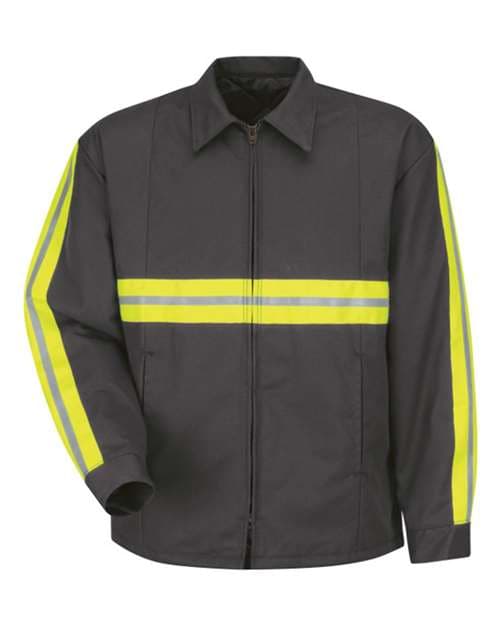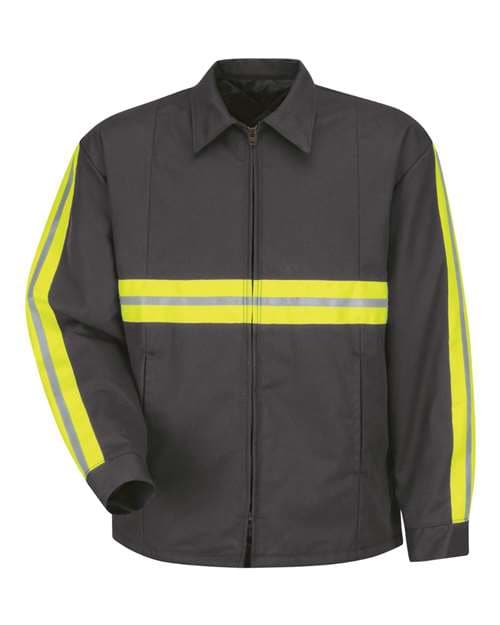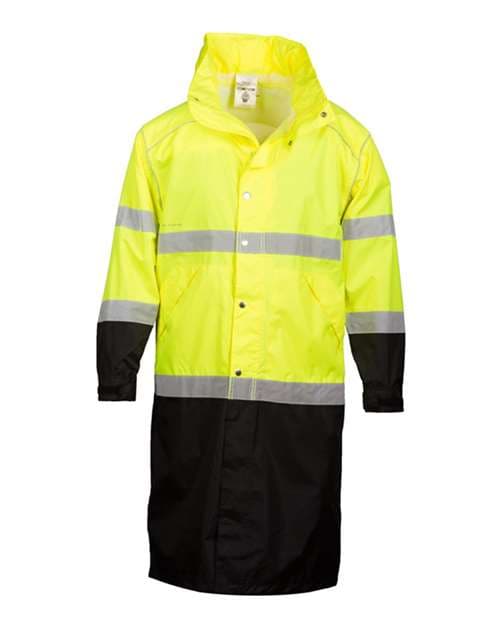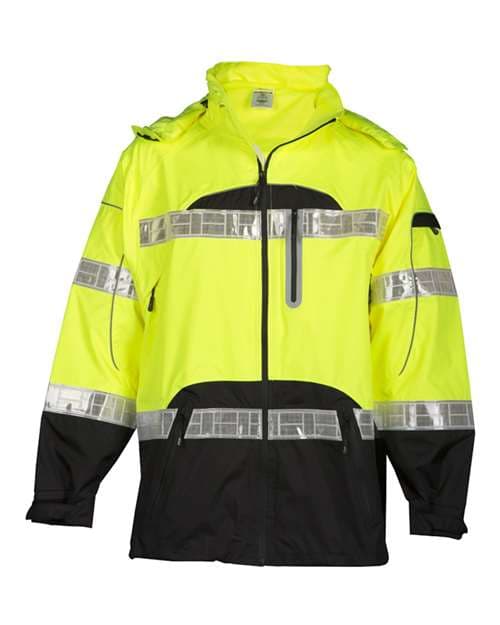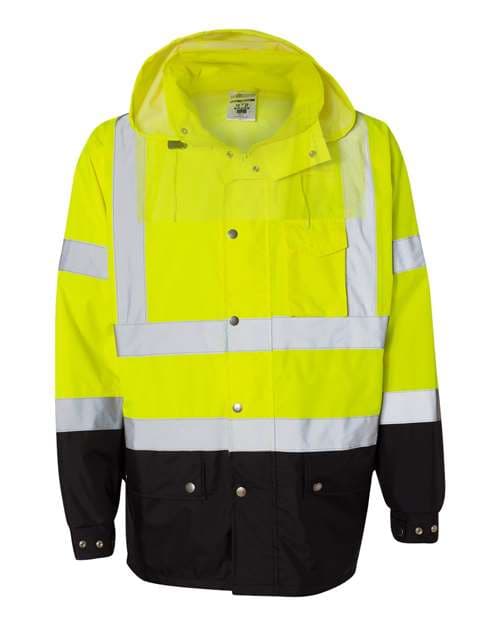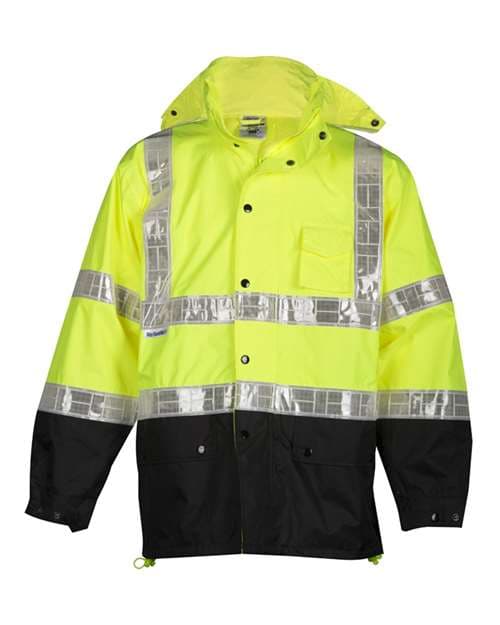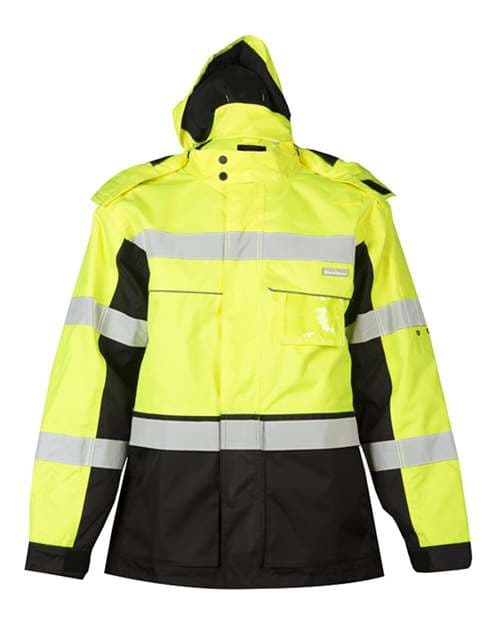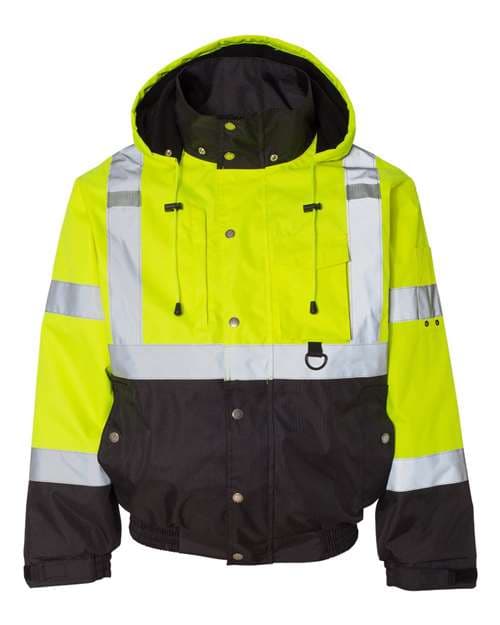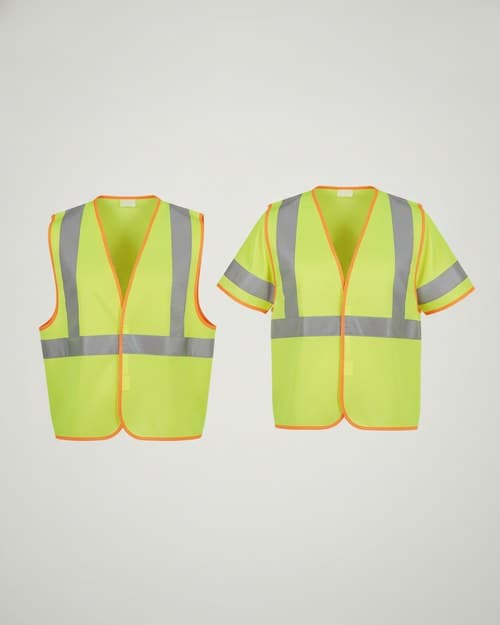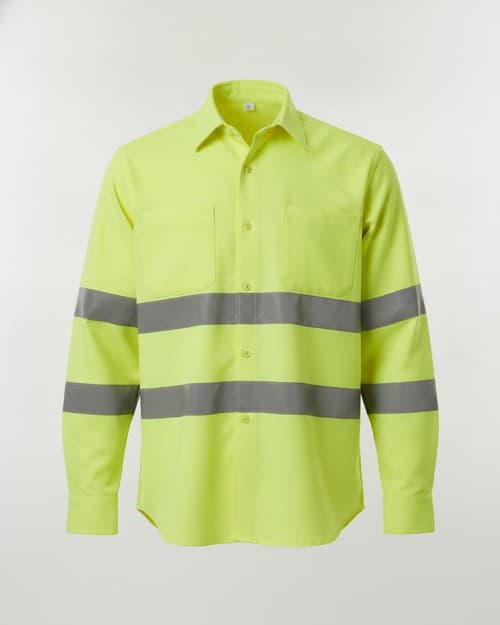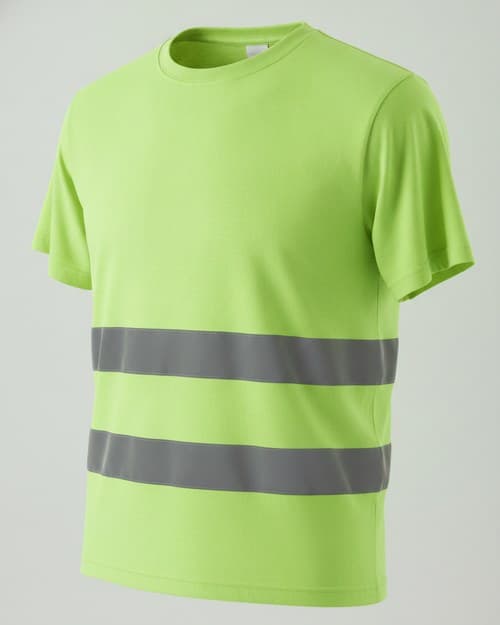
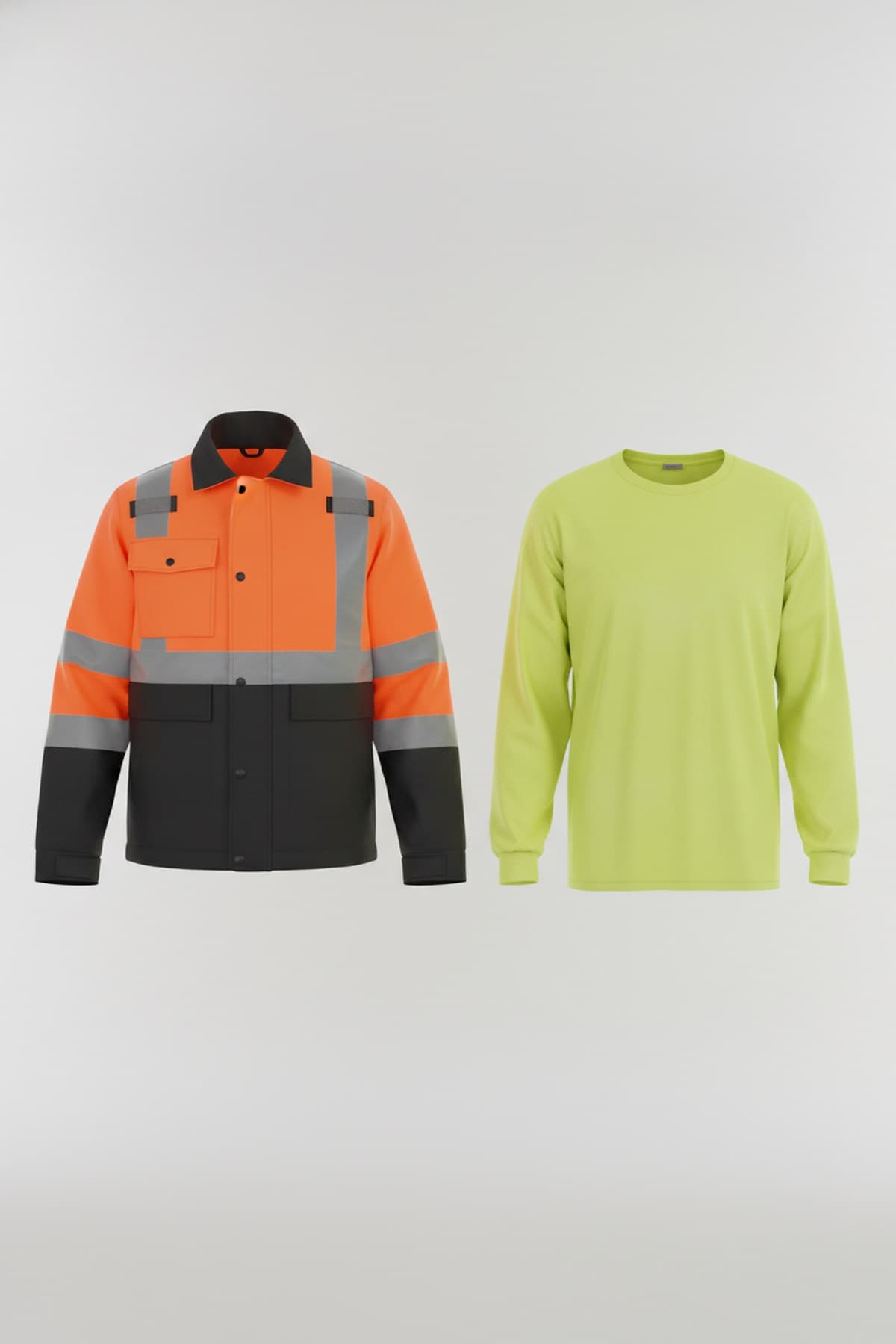
Some garments on job sites look like hi-vis and aren't. A garment can have fluorescent fabric and tape and still fail an inspection. Here's how to read the difference.
Three buckets, not one
Not every bright garment is making the same claim. There are three categories, and they don't work the same way on a regulated site.
ANSI certified. The manufacturer certifies to ANSI/ISEA 107, names a class (Class 1, 2, or 3), and names a type (R, O, or P). All three have to be present. This is the garment for a job site where hi-vis is required by contract or site plan.
Enhanced visibility. The garment has fluorescent fabric and may have reflective tape, but the manufacturer does not certify to the standard. Some enhanced-visibility pieces use the same 3M tape found in certified pieces. They look like hi-vis. They are not certified hi-vis. They're a real category with quality pieces in it, but they're not interchangeable with a certified garment on a site that specifies a class.
Safety color. Fluorescent fabric, no tape. Background material. This is where safety-green tees from general apparel brands sit. The fabric meets the standard's background color spec; the garment is not ANSI/ISEA 107 compliant. The brands that sell them say what they are. The problem is buyers who assume "fluorescent" means "certified."
The one test
Look for ANSI/ISEA 107 on the label, plus a class and a type.
All three present — the manufacturer certifies to the standard.
ANSI/ISEA 107 without a class and type — the label is naming the standard without certifying to it. The garment may be bright. It isn't certified.
This matters on job sites where the class is written into the contract or site plan. A safety manager scans the garment and sees tape. An inspection looks at the label.
A real example from our catalog
Bayside makes garments with 2-inch silver 3M laminate striping. The 3M tape is the real thing. The copy describes the garment as high-visibility. The supplier spec never names ANSI/ISEA 107 or a class. Those go in the enhanced-visibility column. A site manager who needs Class 2 for a highway project can't substitute them, even though they pass the visual check.
Contrast with Kishigo. Every Kishigo hi-vis style references ANSI/ISEA 107, and most state a specific class in the supplier spec. Red Kap states the class directly: Type R Class 2 on its hi-vis shirts in their standard single-tape colors, and Class 3 only in the double-tape color it marks AB. Those are the certified styles, and you can filter to the class you need before you contact us.
Gildan and Hanes make safety-green pieces that name the ANSI standard without stating a class. That's correct — those are safety-color pieces. Fluorescent background fabric with no tape has no class to state. The labels are accurate; the pieces do what they say.
How this site keeps them apart
Certified styles show the class in the product spec and sit under their class in the filter. Enhanced-visibility styles have their own shelf.
We don't call anything certified unless the manufacturer does.
If the job requires a class, tell us the class. We'll match you to a certified garment and stay out of the others.
What to send us
- The class required on your site, or the type of work if you're not sure which class applies
- Quantity and any reorder schedule
- Your logo or artwork, vector preferred
- Whether decoration is needed now or after you have the garment in hand
We have no minimum.
OSHA does not approve products
The standard that governs hi-vis is ANSI/ISEA 107. A garment states a standard only where its supplier says it meets one.