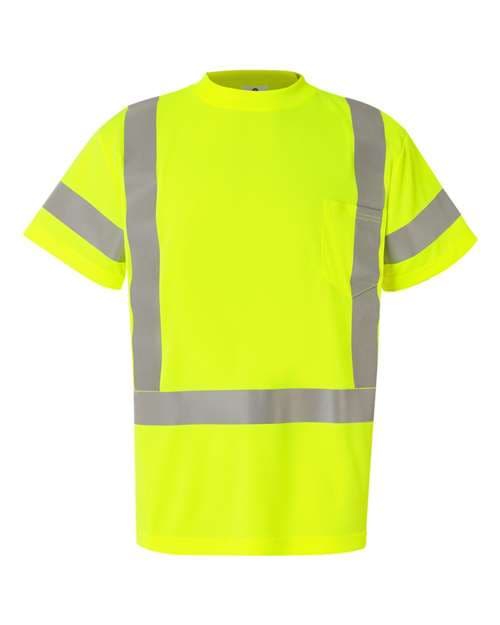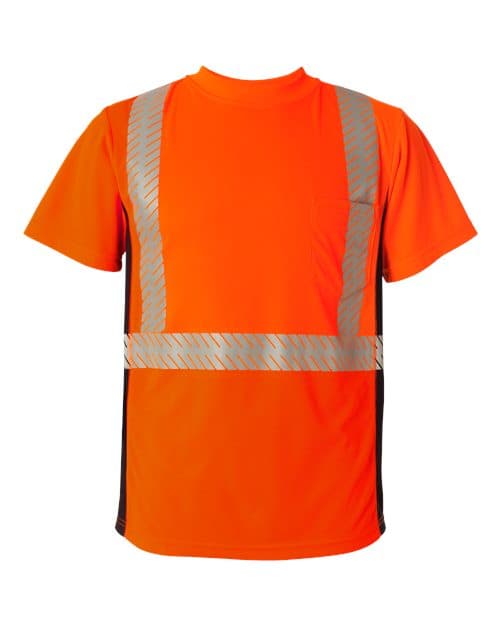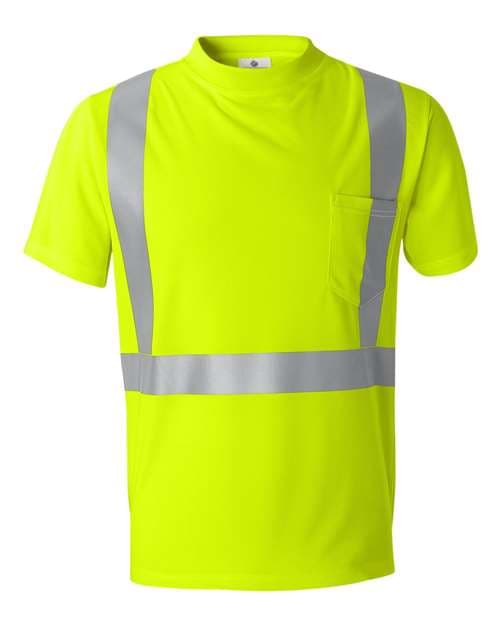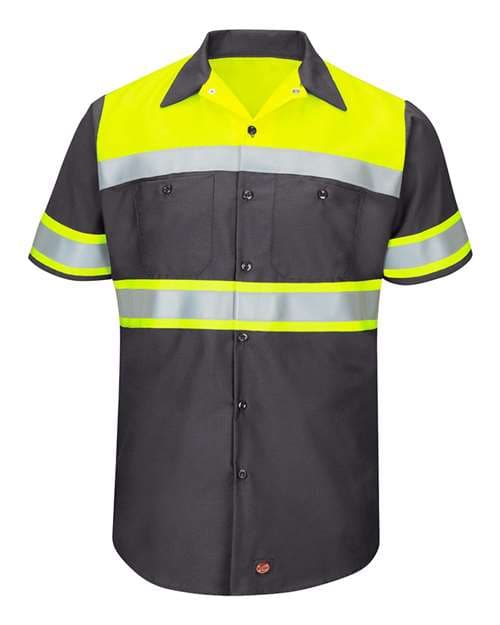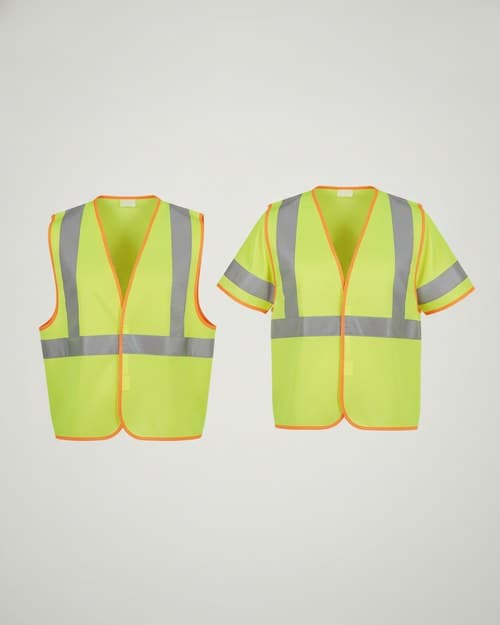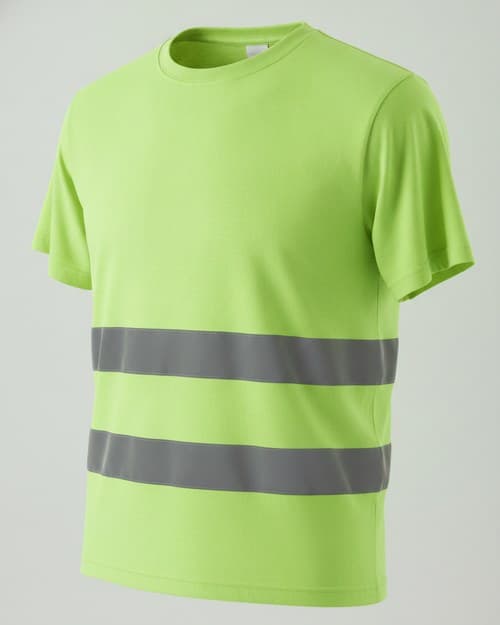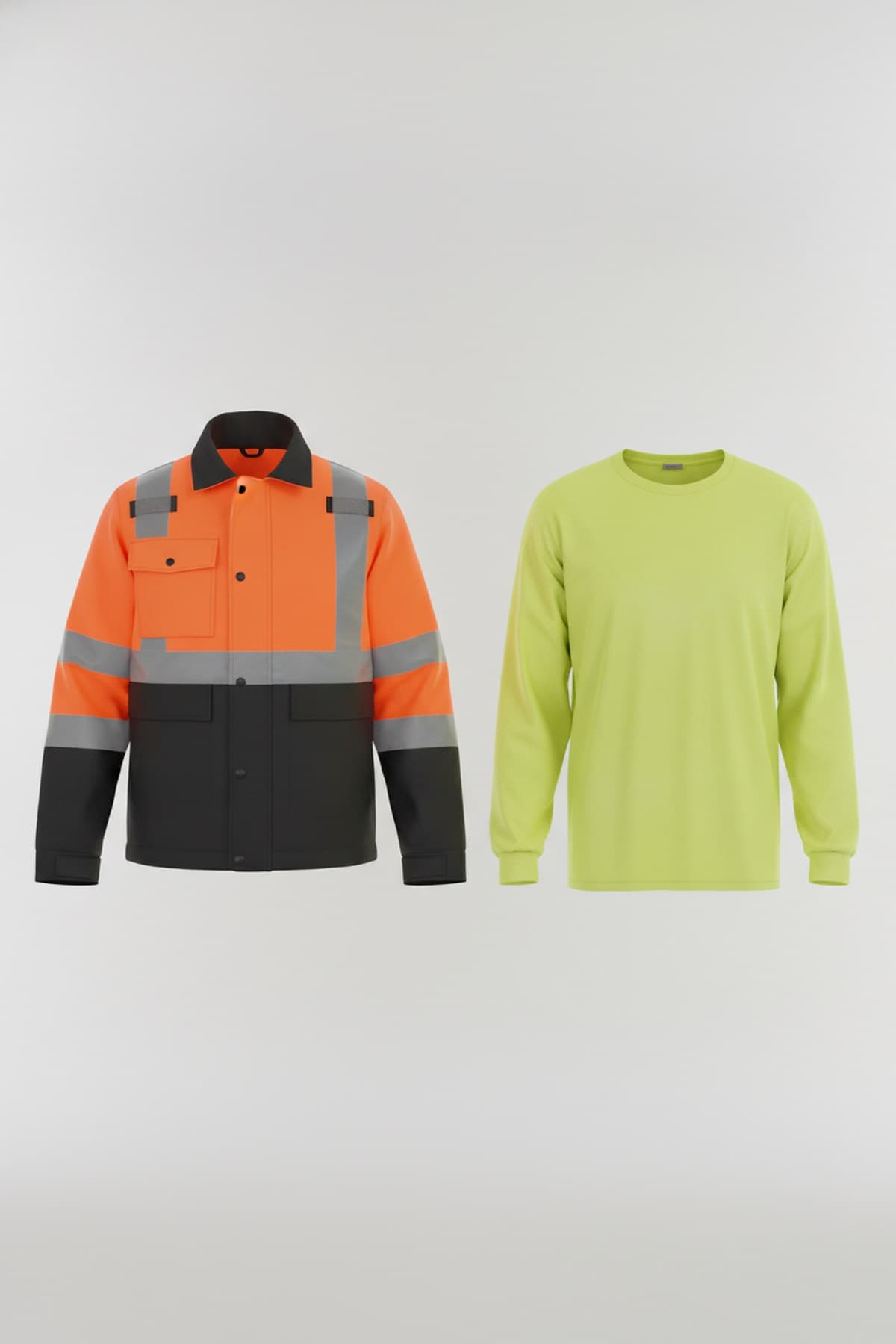
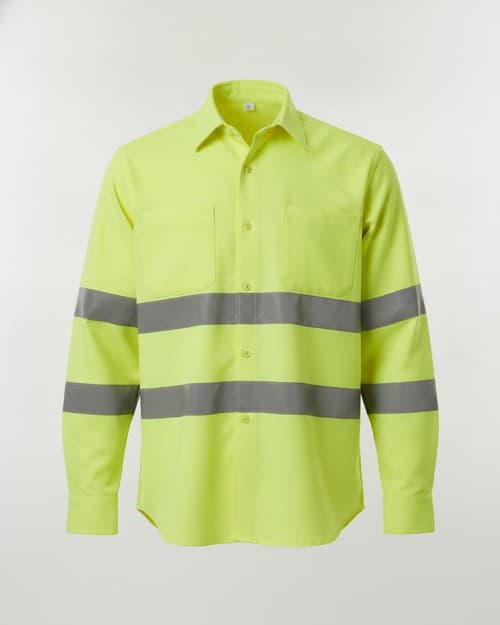
Not all bright colors are hi-vis. A neon green tee from a regular supplier is not a hi-vis garment, even if it looks the part.
Hi-vis is a technical term with a technical definition. Here's what it actually covers.
The standard
Hi-vis workwear in the United States is governed by ANSI/ISEA 107, currently the 2020 edition. ISEA is the International Safety Equipment Association. ANSI publishes the formal standard.
If a garment doesn't reference ANSI/ISEA 107, it isn't certifying as hi-vis. It might be bright. It isn't hi-vis.
Two things the garment has to do
A certified hi-vis garment has two separate jobs.
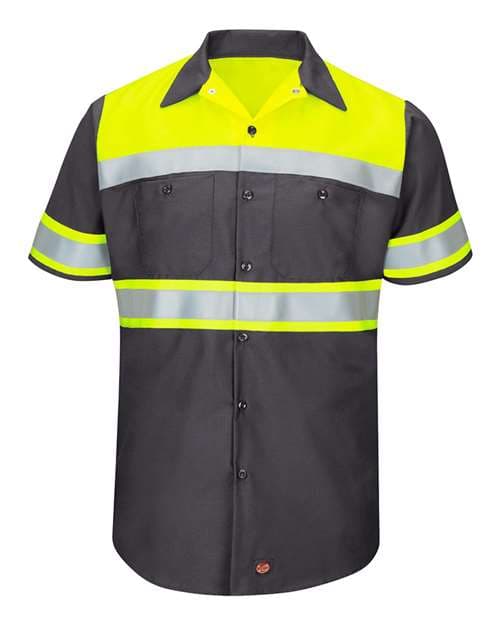
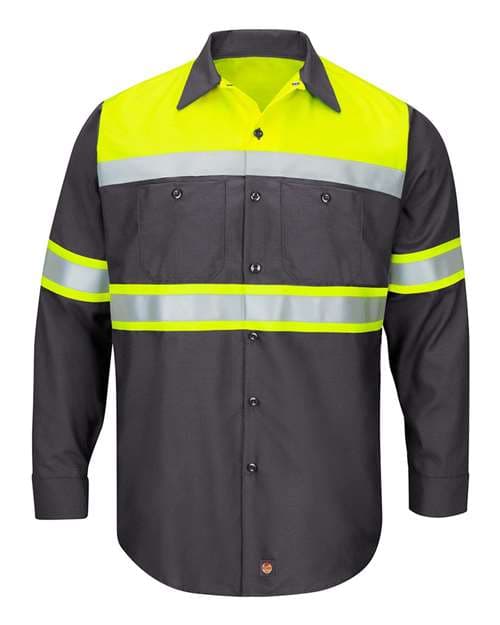
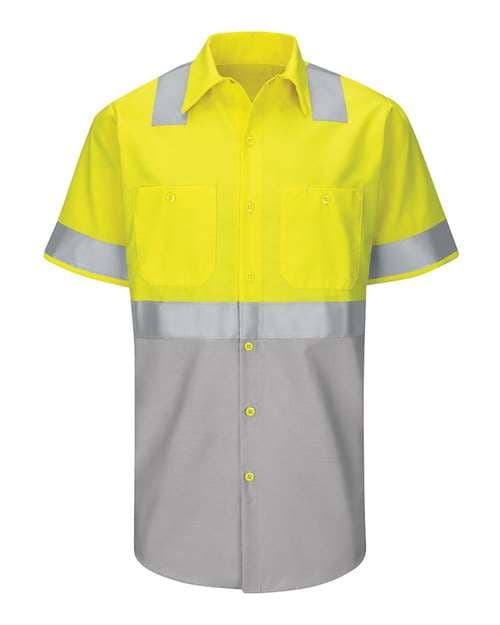
The first is daylight visibility. This comes from the background material — the fluorescent fabric that catches sunlight or artificial lighting and makes the wearer stand out against a cluttered background. ANSI/ISEA 107 allows three background colors: fluorescent yellow-green, fluorescent orange-red and fluorescent red. That's it.
The second is nighttime visibility. This comes from retroreflective tape — the strips that throw a driver's headlights back toward the driver. The tape is what makes the garment work when it's dark. Without it, a fluorescent shirt stops working when the sun goes down.
Both elements have minimum area requirements set by the class (more on that at Class 2 vs Class 3: which one your crew needs).
A shirt can have the fluorescent background and no tape. That's not Class 2 or Class 3, and it isn't ANSI/ISEA 107 compliant: only its fabric meets the background color spec. Gildan and Hanes safety-green pieces fall here.
When it's legally required
The Federal Highway Administration's worker visibility rule (23 CFR Part 634) requires Class 2 or Class 3 hi-vis for anyone working in the right-of-way of a federal-aid highway. The required class depends on the work environment and traffic speed. Flaggers, highway crew, and DOT-regulated work are the most common cases.
For work not covered by federal-aid highway rules, many state OSHA programs carry their own hi-vis requirements. Some go further than federal minimums.
If your crew is working in or near moving traffic and you're not sure whether hi-vis is mandated, the answer is probably yes.
What the label tells you
On a certified garment, the label will reference ANSI/ISEA 107, name a class (Class 1, 2, or 3), and name a type (Type R for roadway, Type O for off-road, Type P for public safety). If all three are present, the manufacturer is certifying to the standard.
Garments that say "ANSI compliant" without the class and type are not making the same claim.
What's in our catalog
We carry hi-vis from Kishigo, Red Kap, Gildan, Hanes, and others. Most of our Kishigo styles state a specific class in the supplier spec, so you can filter before you call.
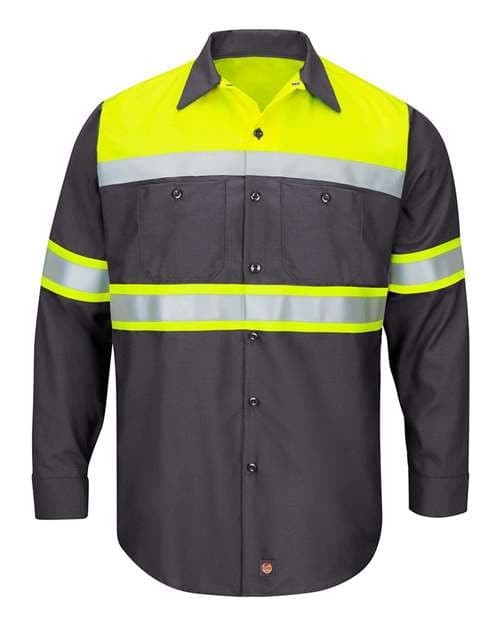
Red Kap's hi-vis work shirts state Type R Class 2 in their standard single-tape colors. Only one color is Class 3: the double-tape colorway Red Kap marks AB (fluorescent yellow/green with two rows of tape). If the job needs Class 3, order that color or a Class 3 style from Kishigo. Our shelves list these Red Kap shirts as Class 2, because every other color of them is. Gildan and Hanes safety-green pieces are background material — they don't name a class because there's no tape to class.
We can match you to the class that fits your site. Tell us the class required or describe the work environment, and we'll get there.
What to send us
- The class required on your site, or the type of work if you're not sure which class applies
- Quantity and any reorder schedule
- Your logo or artwork, vector preferred
- Whether you need decoration now or after you have the garment in hand
We have no minimum.
OSHA does not approve products
The standard that governs hi-vis is ANSI/ISEA 107. A garment states a standard only where its supplier says it meets one.