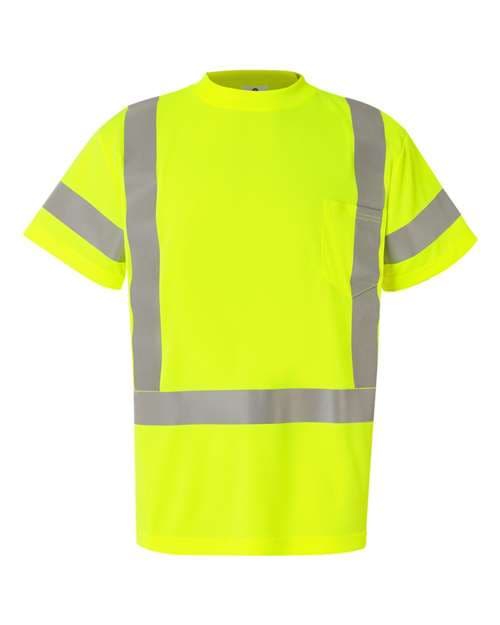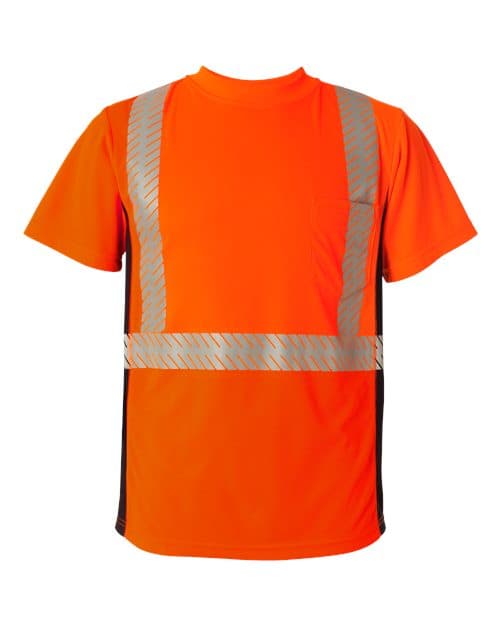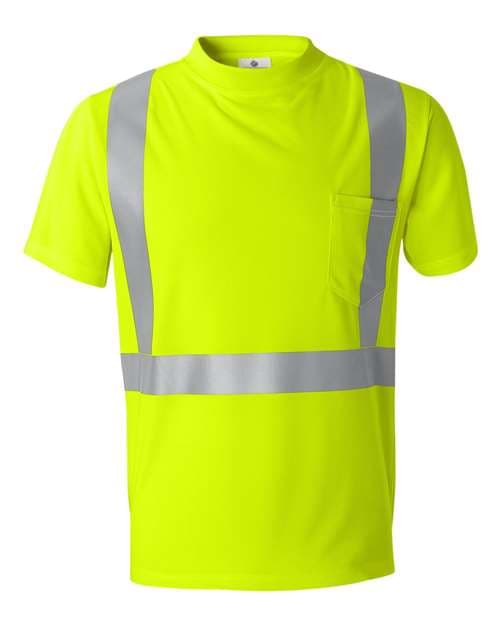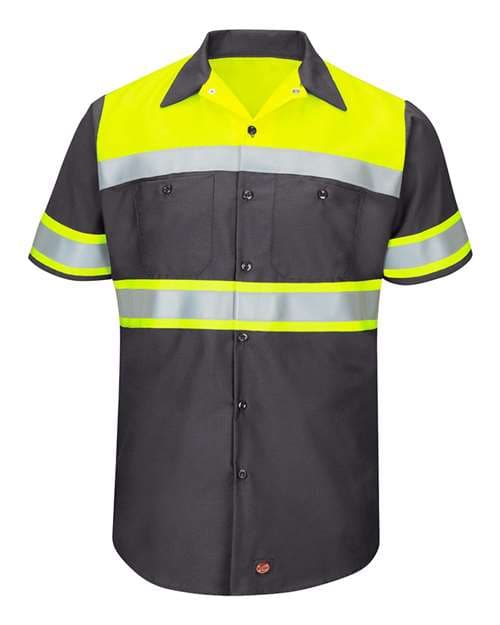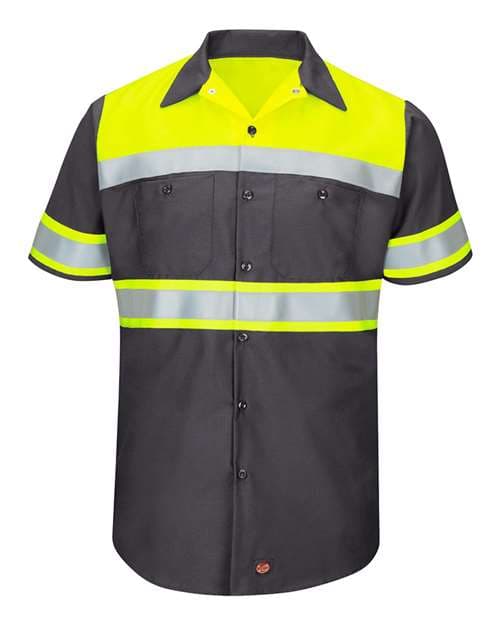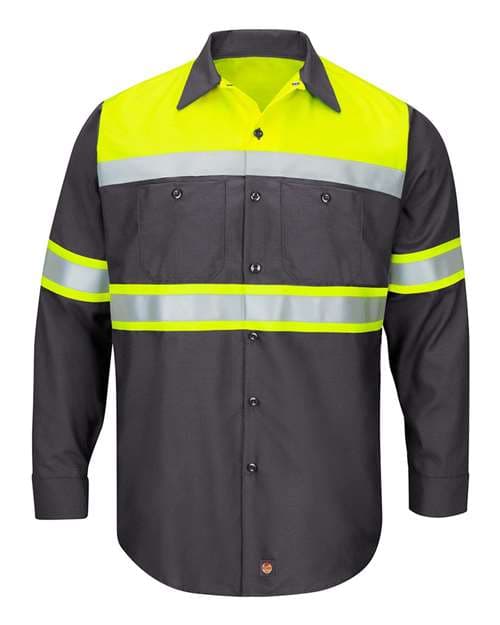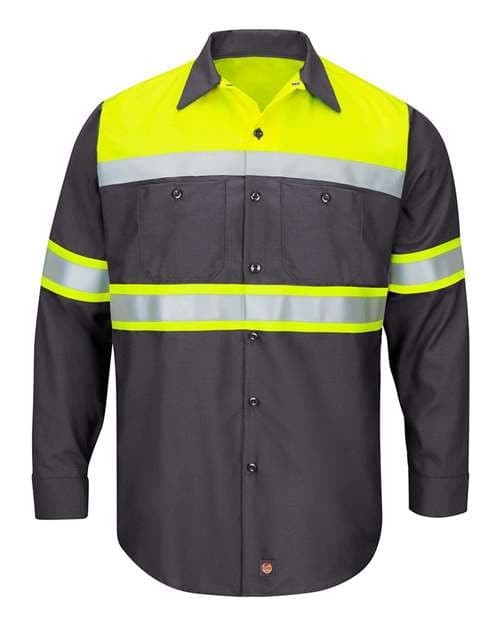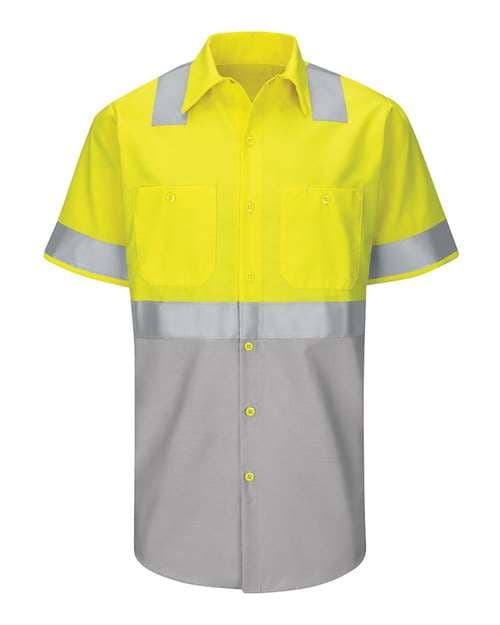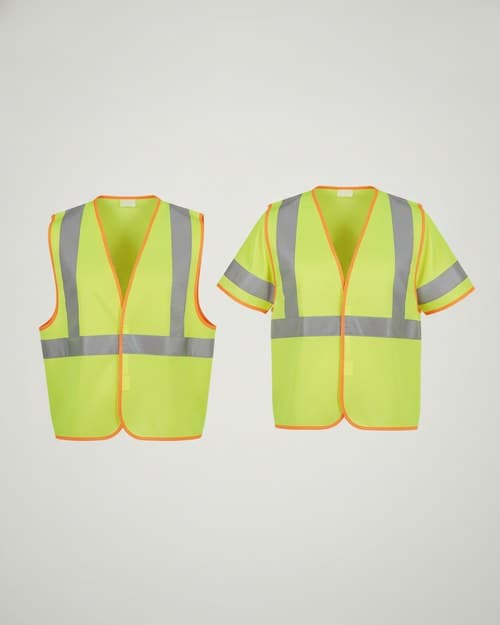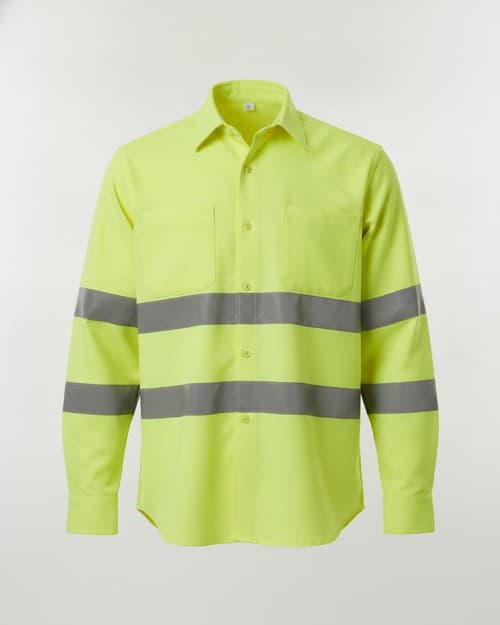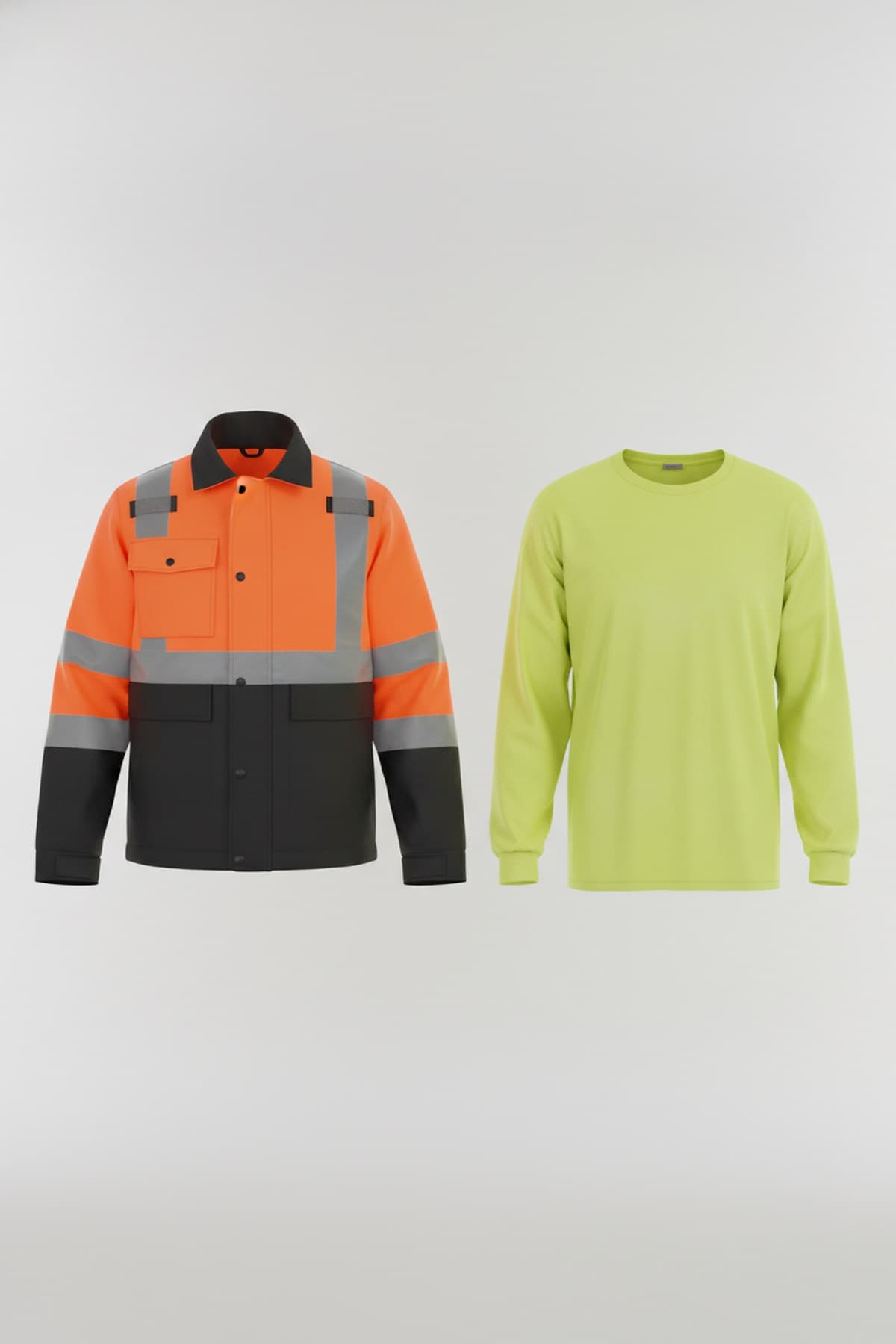
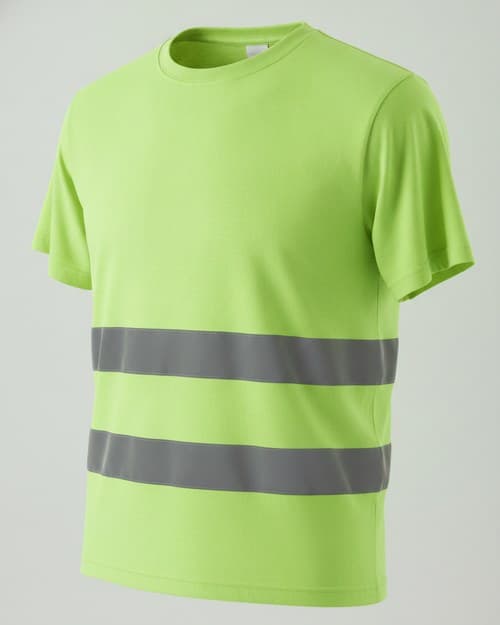
You can print on a hi-vis shirt. You just can't print on the tape.
That's the short version. Most shops won't say it out loud, because it's easier to take the order and hope. Here's how we actually run it.
What the tape is doing
A certified hi-vis garment gets its rating from two separate things. The fluorescent fabric, which is what makes you visible in daylight. And the retroreflective tape, which throws headlights back at a driver in the dark.
Both have a minimum area the garment has to keep. Cover either one and you've taken something away.
We decorate everything except the reflective tape
Nothing goes on the tape. Not a print, not a stitch.
Everywhere else we can decorate, but any print covers fluorescent background, and the class sets a minimum of that too. So we keep the print small enough to hold the class. Exact size depends on the garment, so we'll tell you what fits once we know the style.
That covers what most crews ask for. A left chest logo. A name drop. A phone number across the shoulders. A full back print covers the most background, so we check it against the garment's class before we quote it.
Which method
We run screen printing, embroidery and transfers, in DTF and waterbase.
| Method | Reach for it when |
|---|---|
| Screen printing | Solid color art on a flat panel, larger runs |
| Embroidery | Left chest, caps, polos, outerwear. The stitch sits on the fabric |
| Transfer, DTF | Full color or fine detail, smaller runs, awkward placements |
| Transfer, waterbase | Softer hand, where the feel of the print matters |
Quantity isn't the constraint. We run up to a million pieces a month.
What actually lasts
Screen print and embroidery outlast the garment. Hundreds of washes. The shirt gives out first.
Transfers go 65 washes and up, if they're washed cold and inside out. That "if" is doing real work. Hot water and a hot dryer will cut it well short. The crews who get full life out of a transfer are the ones told how to wash it on day one.
Most suppliers quote a number with no condition attached. That number means nothing.
The part nobody tells you
That rule protects the tape. It doesn't make us the authority on your garment's rating.
The standard sets a minimum area of fluorescent background as well. A print on the fluorescent panel misses the tape, but it does cover background fabric. On a roomy Class 3 jacket that's nothing to worry about. On a borderline garment it can matter.
So the certified area belongs to whoever made the garment, not to us. If you're outfitting a crew where the rating has to survive an inspection, say so up front. We'll keep the decoration conservative and point you at styles with room to spare.
Anyone who tells you a print can never affect a rating is guessing.
What to send us
- The style, or just the class you need
- Your art, vector if you have it
- Placement and rough size
- Quantity
We'll come back with what fits on that specific garment.
OSHA does not approve products
The standard that governs hi-vis is ANSI/ISEA 107. A garment states a standard only where its supplier says it meets one.