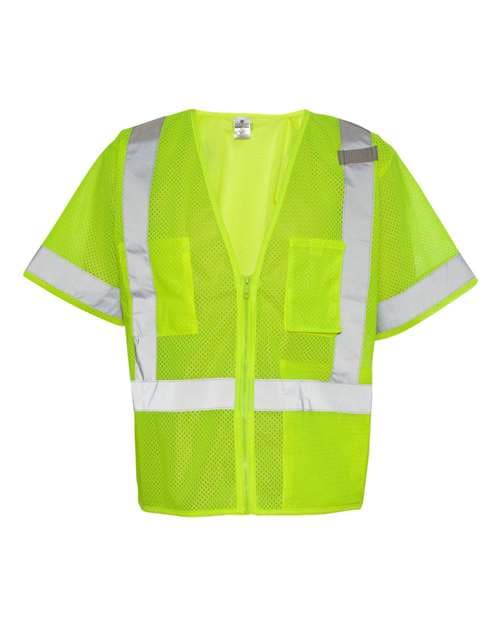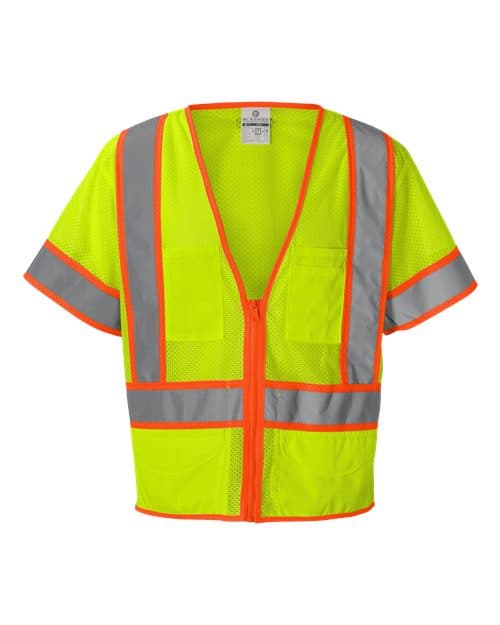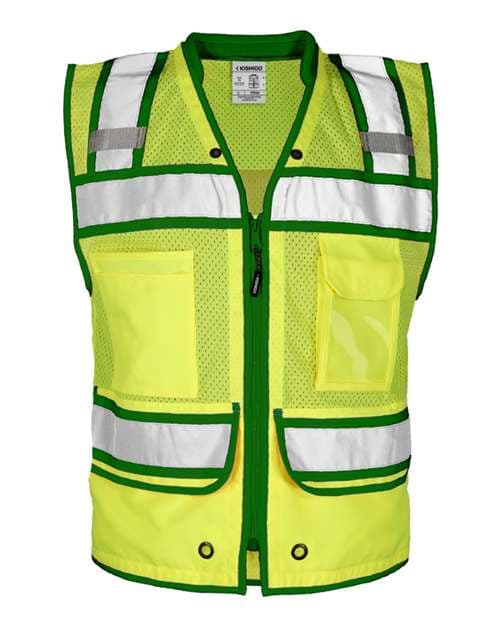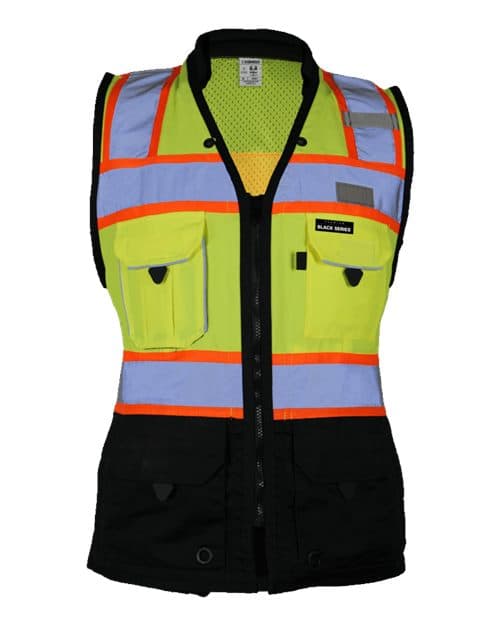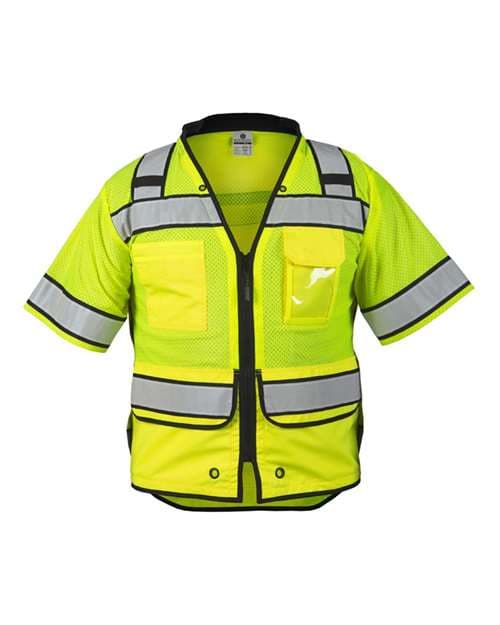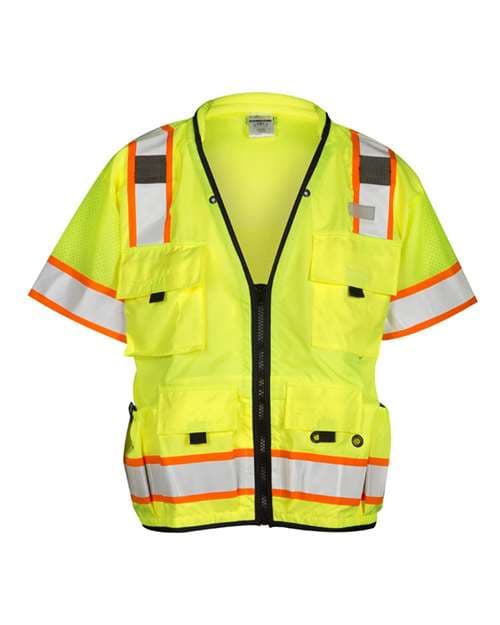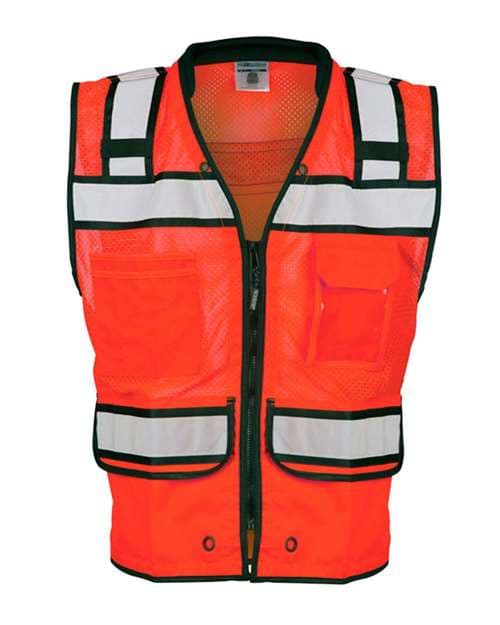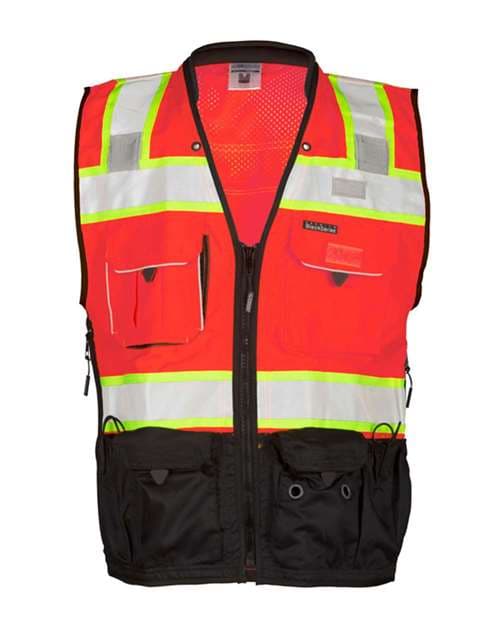
Class 2 is for a lot of job sites. Class 3 is for the ones where getting the class wrong puts someone in the path of a truck.
Here's how to read the difference.
The decision starts with the traffic
ANSI/ISEA 107 ties the class to the speed and volume of the vehicles your crew is exposed to.
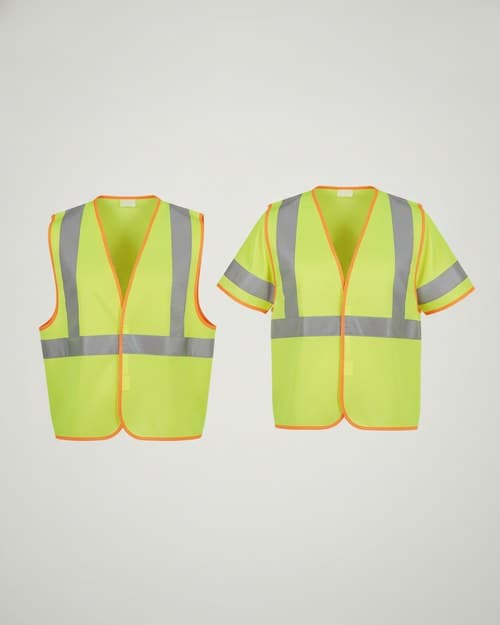
Class 2 covers moderate risk — roadway work near traffic moving up to 50 mph, or work areas where visibility is reduced but exposure is limited. Parking lots, airports, utility maintenance, construction where workers aren't directly adjacent to moving lanes.
Class 3 is the high-risk category: traffic over 50 mph. Flaggers in active lanes. Work on interstate highways. Any crew that's going to be where vehicles are moving fast and the driver's reaction time matters. If someone on your crew is the last thing between a distracted driver and a work zone, they're in Class 3 territory.
A simple test: traffic up to 50 mph, and nobody in an active lane, Class 2 may be fine. Traffic over 50 mph, or anyone flagging or working in a lane, they need Class 3.
What Class 3 adds over Class 2
More of both things that make the garment work.
Class 3 requires more background material — the fluorescent fabric that's visible in daylight — and more retroreflective tape than Class 2. The tape is what throws headlights back at a driver in the dark.
| Minimum area | Class 2 | Class 3 |
|---|---|---|
| Background material | 775 sq in | 1,240 sq in |
| Retroreflective tape | 201 sq in | 310 sq in |
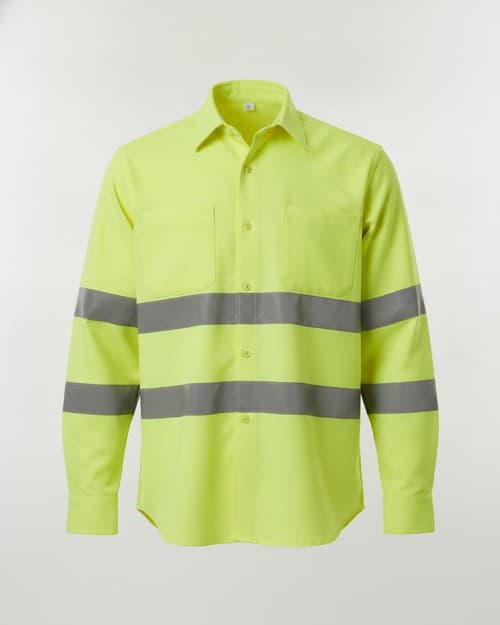
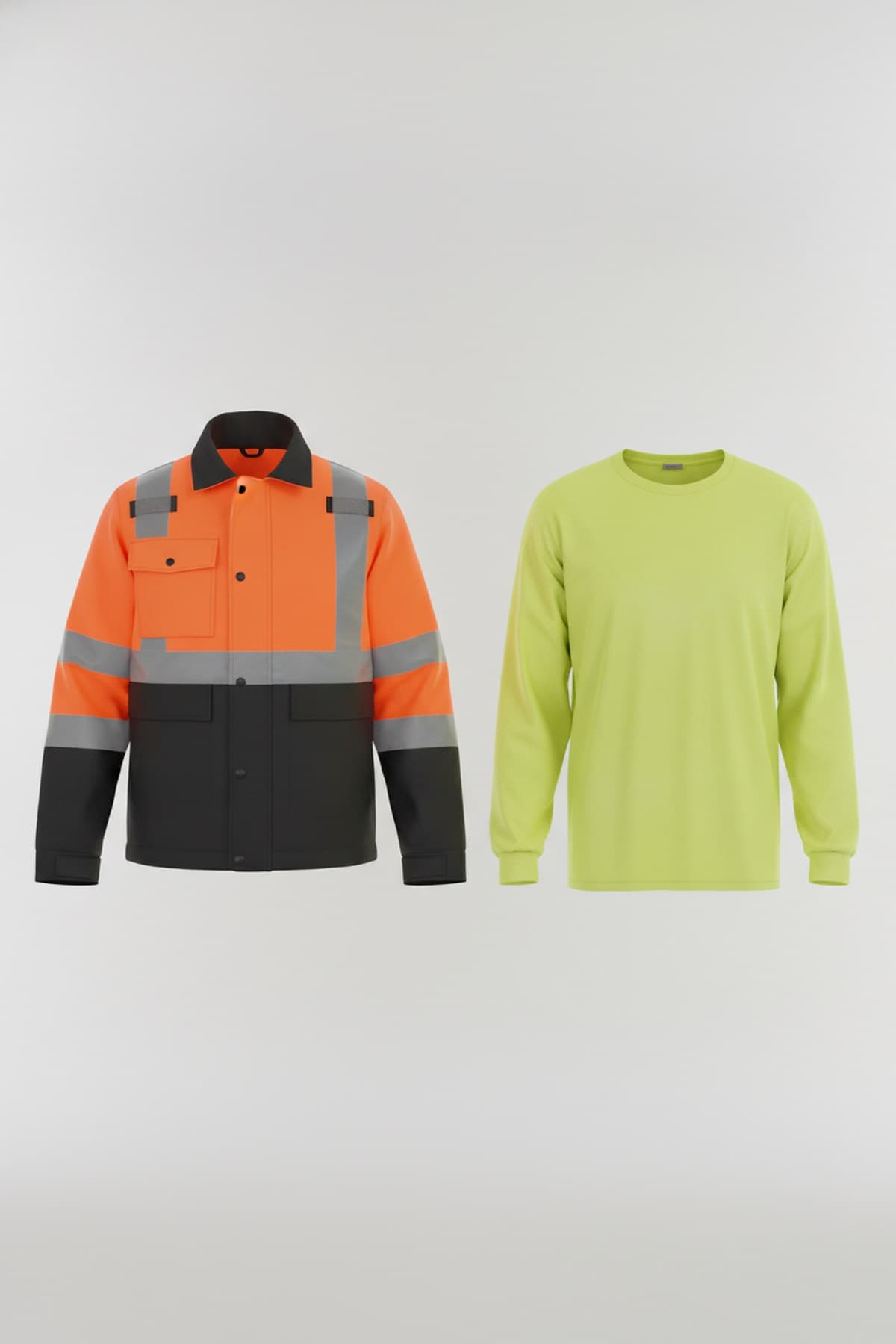
Jackets are the common Class 3 garment because they have the surface area. A Class 3 shirt exists, but it's rarer because the sleeve coverage is how many shirts get there. Class 2 is where most vests, shirts and most standalone pieces sit.
Type R, Type O, Type P
The type tells you the work environment.
| Type | Environment | Examples |
|---|---|---|
| Type R | Roadway and temporary traffic control | Highway crews, flaggers, DOT work |
| Type O | Off-road | Airport ramp crews, rail yards, warehouses with vehicle traffic |
| Type P | Public safety | Emergency responders, law enforcement |
Most construction and contractor buyers are in Type R. Type O is for enclosed environments where road vehicles aren't the hazard but heavy equipment is. Type P carries its own additional requirements for police and EMS applications.
If the spec sheet says "Type R Class 2", that covers the majority of roadway work. "Type R Class 3" is for high-speed highway and interstate exposure.
What's in our catalog
We carry certified hi-vis from Kishigo, Red Kap, Gildan, Hanes, and other brands.
Every Kishigo hi-vis style in our catalog names ANSI/ISEA 107, and most state a specific class in the supplier spec. That means you can filter by class before you contact us, not after.
Red Kap's hi-vis work shirts state Type R Class 2 in their standard single-tape colors. Only one color is Class 3: the double-tape colorway Red Kap marks AB (fluorescent yellow/green with two rows of tape). If the job needs Class 3, order that color or a Class 3 style from Kishigo. Our shelves list these Red Kap shirts as Class 2, because every other color of them is. The colorblock ripstop shirts state Type O Class 1. That's their factory certification, not a claim we're making for them.
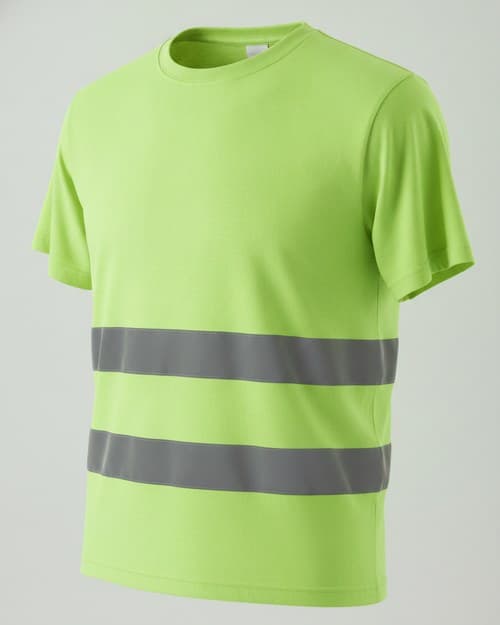
One thing worth knowing: Gildan and Hanes hi-vis pieces name the ANSI standard but don't state a class. A safety green tee with no reflective tape is not ANSI/ISEA 107 compliant. Only its fabric meets the standard's background color spec, and with no tape there is no class to state.
The decoration question
You can print and embroider on certified hi-vis. The constraint is the tape — nothing goes on it.
The full rule, and what it means for inspection, is on its own page: Decorating hi-vis without losing the rating.
What to tell us
- The class required on your site, or the type of work if you're not sure which class applies
- Quantity and any reorder schedule
- Your logo or artwork, vector preferred
- Whether decoration is needed now or later
We have no minimum. A crew of six gets the same class options as a crew of six hundred. Tell us the class and we'll match you to the garment.
OSHA does not approve products
The standard that governs hi-vis is ANSI/ISEA 107. A garment states a standard only where its supplier says it meets one.